
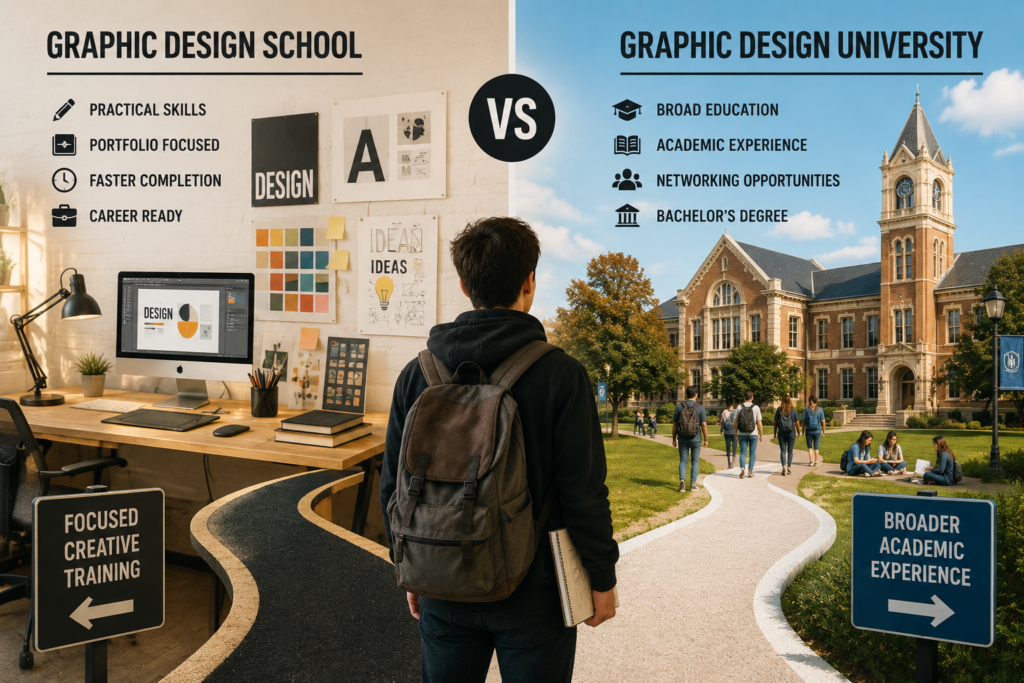
The creative industry is evolving rapidly, and aspiring designers have more educational options than ever before. One of the biggest decisions students face is whether to enroll in a Graphic Design School or pursue a degree through a graphic design university. While both paths can lead to rewarding careers, they offer different learning experiences, timelines, and opportunities.
Understanding these differences can help you choose the educational route that aligns with your goals, learning style, and career aspirations.
Understanding the Difference
Although the terms are often used interchangeably, graphic design schools and universities typically have distinct approaches.
A graphic design school focuses specifically on creative education. Coursework is centered on developing practical design skills, mastering industry software, building portfolios, and preparing students for professional work.
A graphic design university, on the other hand, usually offers a broader academic experience. Students complete general education courses alongside design classes while earning a bachelor’s degree. This approach provides a wider educational foundation but often requires a longer time commitment.
Neither option is universally better. The right choice depends on your personal objectives.
When a Graphic Design School Makes Sense
Students who want to enter the workforce quickly often prefer specialized design schools.
These programs typically emphasize:
- Visual communication principles
- Typography
- Branding
- Digital illustration
- Motion graphics
- UX/UI fundamentals
- Portfolio development
- Real-world design projects
Because the curriculum is focused almost entirely on design, students often spend more time creating work that demonstrates their abilities to future employers.
For individuals who already know they want to become professional designers, a Graphic Design School can provide an efficient path toward developing job-ready skills.
Advantages of a Graphic Design University
Universities provide a more traditional college experience.
Students may benefit from:
- Broader academic knowledge
- Elective courses in business, psychology, or marketing
- Campus networking opportunities
- Student organizations
- Research resources
- Internship partnerships
A university degree may also satisfy educational requirements for certain employers, especially within larger organizations or government positions.
Additionally, exposure to subjects outside of design can strengthen critical thinking and communication skills that benefit creative professionals throughout their careers.
Consider Your Career Goals
Before choosing a program, think about where you want your career to go.
If your goal is to become:
- A freelance designer
- A branding specialist
- A UI/UX designer
- A motion graphics artist
- A creative entrepreneur
then building a strong portfolio may matter more than the name of your institution.
However, if you hope to pursue graduate education, teach design, or work for organizations that require bachelor’s degrees, a university may offer additional advantages.
Your long-term vision should guide your educational decision.
Portfolio Matters More Than the Diploma
One fact remains consistent throughout the design industry: employers want to see your work.
An impressive portfolio showcasing creativity, technical skills, and problem-solving ability often carries more weight than the specific institution listed on your résumé.
Whether you attend a specialized school or a university, focus on creating projects that demonstrate:
- Original thinking
- Brand strategy
- User-centered design
- Typography expertise
- Layout composition
- Digital production skills
Strong portfolios consistently open more doors than credentials alone.
Learning Environment Matters
Educational success depends heavily on how you learn best.
Some students thrive in smaller, specialized classrooms where nearly every course focuses on creative development.
Others enjoy the broader university environment, where they interact with students from different disciplines and gain diverse perspectives.
Ask yourself:
- Do you prefer hands-on learning?
- Would you benefit from smaller class sizes?
- Do you enjoy academic research?
- Are networking opportunities important?
- How quickly do you want to begin your career?
Honest answers can help narrow your options.
Cost and Time Commitment
Budget is another important consideration.
Graphic design schools may offer shorter programs that reduce both tuition costs and time spent in school.
Universities generally require four-year degree programs that include additional coursework beyond design. While this can increase overall expenses, students also gain a broader educational experience.
When comparing programs, evaluate:
- Tuition
- Financial aid
- Graduation timeline
- Career placement support
- Internship opportunities
- Graduate employment rates
Looking beyond tuition alone provides a more accurate picture of long-term value.
Industry Connections and Career Support
Many successful design programs maintain relationships with agencies, studios, and creative businesses.
Internships, portfolio reviews, mentorship opportunities, and networking events can significantly improve employment prospects after graduation.
Regardless of the institution you choose, investigate the school’s career services, alumni success stories, and employer partnerships before enrolling.
These resources often have a lasting impact on career development.
Final Thoughts
Choosing between a graphic design school and a graphic design university isn’t about finding a universally better option—it’s about finding the right fit for your goals.
Students seeking intensive, career-focused training may find that a Graphic Design School provides the practical experience and portfolio development needed to enter the industry quickly. Those who value a broader academic education and the traditional college experience may benefit more from a university program.
Ultimately, success in graphic design depends on continuous learning, creativity, dedication, and a portfolio that demonstrates your ability to solve visual communication challenges. No matter which educational path you choose, investing in your skills and consistently creating outstanding work will remain the strongest foundation for a successful creative career.




























1 Comment on "Graphic Design School vs Graphic Design University: Choosing the Right Path for Creative Success"
Would you like to share your thoughts?
Your email address will not be published. Required fields are marked *