Digital artists now have more ways than ever to monetise their work on the blockchain. Two of the most talked-about options are NFTs and creator tokens, but they work very differently, and choosing between them matters. Understanding the difference can shape how an artist builds an audience, earns income, and retains control over their creative output.
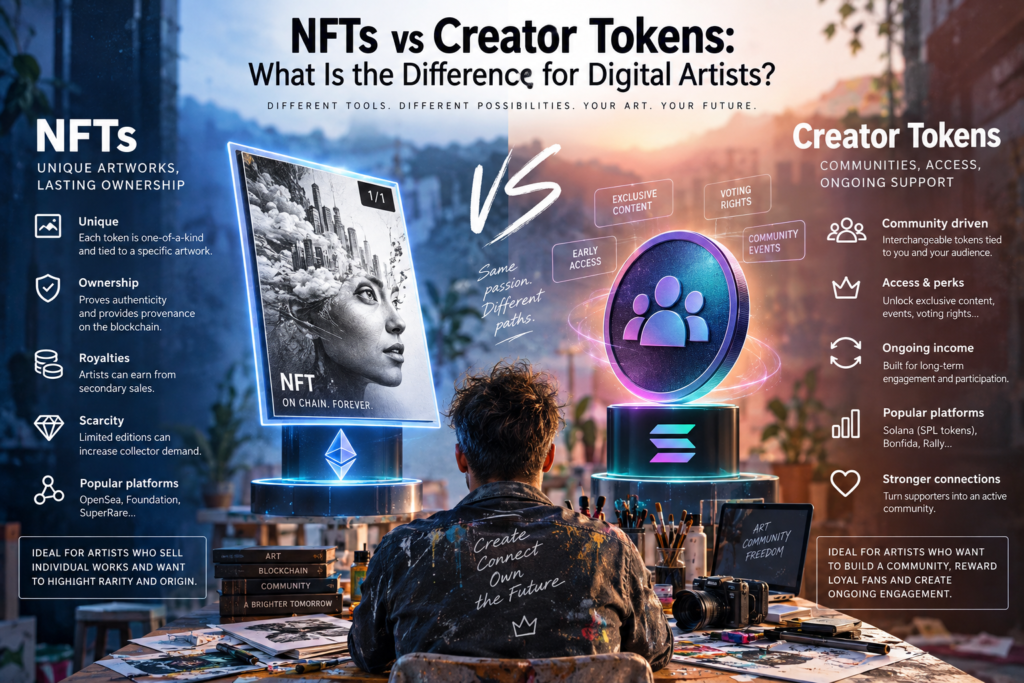
NFTs, or non-fungible tokens, represent ownership of a specific digital item. Each one is unique and tied to a single piece of work. Creator tokens, on the other hand, are fungible, meaning they are interchangeable and tied to a person or community rather than a single asset. They function more like a membership or loyalty system than a certificate of ownership.
Both options appear within rapid blockchain ecosystems, including networks where new Solana tokens launch daily across art, finance, and entertainment categories. For digital artists evaluating these tools, the choice is not just technical, it is strategic. This article explains how NFTs and creator tokens differ, what each one provides, and which might make more sense depending on an artist’s goals.
What NFTs Actually Represent for Digital Artists
An NFT is a non-fungible token. Each one is unique and cannot be swapped one for one with another. When an artist mints an NFT, they create a permanent on-chain record linking a specific digital file to a specific owner. Smart contracts manage the process and record ownership. They also can be set up to enforce royalties when works change hands.
Control over scarcity is another important feature. Artists decide whether to mint a single edition or a limited run. This managed scarcity can increase collector demand. The blockchain provides provenance, so collectors can view a record of an artwork’s origin and ownership transfers. Provenance helps assure buyers that a work is genuine.
NFTs carry certain practical drawbacks that artists should weigh. Security risks, including scams or phishing, have led to lost works and funds. Copyright issues remain an ongoing concern. NFTs without active collector interest may remain unsold. Liquidity on secondary markets can be thin for emerging artists.
What Creator Tokens Are and How They Work
Creator tokens are interchangeable assets built as SPL tokens on networks like Solana. They are not attached to one artwork. Instead, they represent a creator’s ongoing relationship with their broader audience. An artist can issue a fixed or expanding supply and distribute the tokens to early backers, event participants, or paying members through airdrops or sales.
On Solana, these tokens are commonly launched and managed through platforms like Bonfida and Rally. These platforms provide tools for artists to issue SPL tokens and create engagement features. For example, Rally has enabled creators to set up tokens that allow holders to access gated Discord channels, vote on merchandise designs, and participate in exclusive content releases.
Launching a creator token usually involves defining the total supply. Artists outline a clear distribution plan and establish a liquidity pool on a decentralised exchange. Creating that pool makes it possible for anyone to trade the token. Its price generally reflects demand for the artist’s content and community access, not for an individual piece of art.
Key Differences Between NFTs and Creator Tokens
Fungibility marks the first real divide. NFTs tie each token to a single digital asset, making every NFT unique. This supports exclusive sales. Creator tokens work as identical, tradeable units directly linked to a larger community or creative brand. An artist’s choice here sets the direction for how ownership and ongoing involvement will look in practice.
Earnings and engagement also follow separate paths. With NFTs, artists receive revenue at the initial sale and, when the smart contract allows, from secondary sales via built-in royalties. These payouts only occur if collectors trade the artwork. Creator tokens move income generation towards community-driven models. Artists may design systems where token holders access perks, gain entry to future releases, or share in community milestones.
Checking platforms for new Solana tokens helps artists monitor market activity and see which models attract digital creators and collectors now. NFTs often see increased activity when a big release happens or when a niche grows quickly. Creator tokens show their use through ongoing liquidity and the number of tokens actively held or traded within communities.
Which Model Suits Different Artist Goals
Artists who focus on selling individual works often benefit most from the NFT model. It offers proof of rarity and origin for each piece. Collectors who look for exclusivity and provenance view the NFT structure as the preferred way to secure ownership and authenticity.
Those who want community building or recurring relationships often find creator tokens more fitting for their objectives. Musicians, educators, and creators who look for ongoing access, community voting, or shared rewards use this approach, which aligns with a membership or subscription framework. It also strengthens direct connections.
Some artists use both methods. They issue NFTs for flagship works and use creator tokens for wider community participation. Solana’s low transaction fees make either model accessible. That means artists can choose what suits their goals best without being limited by high network costs.
What Digital Artists Should Evaluate Before Choosing
The first question is tokenomics fit. Does the model reflect how the artist runs their business and connects with an audience? For example, digital artists selling on platforms like Foundation or SuperRare focus on limited sales of unique works. NFTs are a strong fit because they highlight provenance and scarcity.
Liquidity and market depth are important in both cases. NFTs depend on active collector marketplaces. Sales volumes can shift rapidly. Creator tokens require an audience willing not only to acquire tokens, but also to trade or stake them. Both models require careful planning around audience incentives and reasonable market expectations.
Practical steps to check should include on-chain signals before any token goes live. This means checking mint authority such as whether a smart contract allows for updates or additional minting. Assessing holder concentration and liquidity pool lock status helps identify both security and reputational risks.
Comparing the Two
NFTs and creator tokens support different creative and business approaches. NFTs suit artists seeking transparent ownership, verifiable provenance, and limited editions. Creator tokens work better for those building ongoing participation, giving access privileges, or distributing collective rewards within a community network. There is no universal best choice.
Solana stands out as a launchpad for both options thanks to its active token ecosystem and reasonable fees. Artists who consider their goals, audiences, and economic approach carefully can select a framework that grows with them as new possibilities appear across blockchain networks.


























2 Comments on "NFTs vs Creator Tokens: What Is the Difference for Digital Artists?"
Would you like to share your thoughts?
Your email address will not be published. Required fields are marked *