
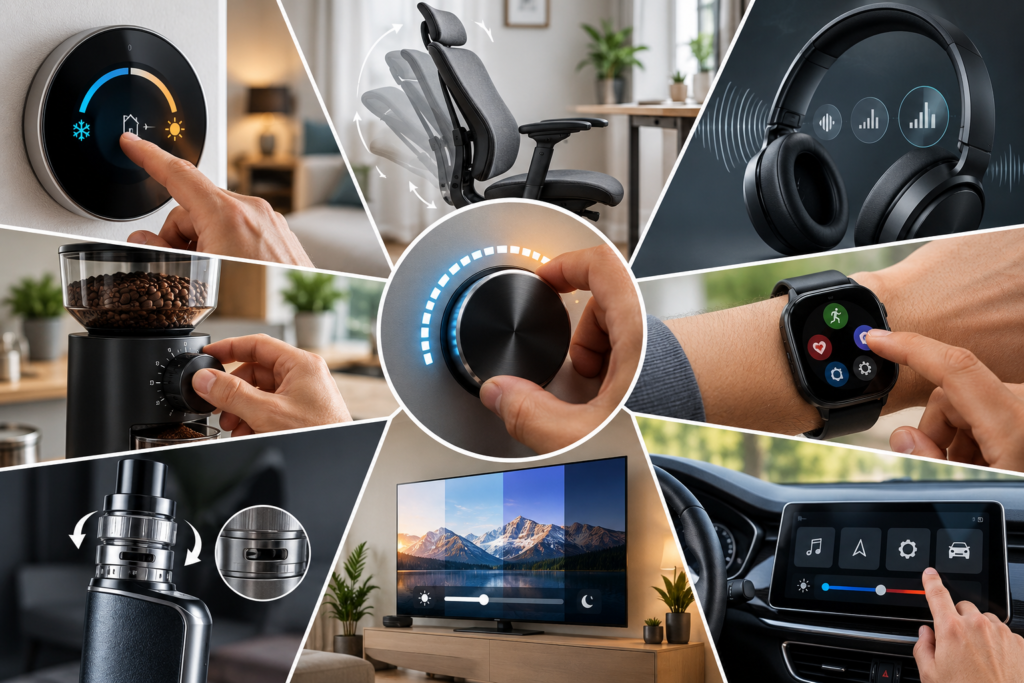
Product design has moved toward adjustable settings that put more control in your hands. Manufacturers now build flexibility into everyday devices from the outset, and that change shows up across home technology, personal electronics and even the software running behind them.
Manufacturers Are Building Products Around Adjustment, Not Assumption
Older consumer products often shipped with one configuration and expected buyers to work around it. A kettle boiled at one temperature, a chair reclined to one angle, and a printer used whatever settings the factory chose.
Modern manufacturing tools make it cheaper to offer several configurations within a single product line, so brands no longer treat one setup as good enough for every buyer.
Buyers have also grown used to comparing products on flexibility as much as price, and reviewers frequently mention how easy a device is to adjust. That pressure keeps manufacturers building in more control instead of stripping it out after launch, since customers now expect it as standard.
Even budget devices increasingly include options that once appeared only in premium models, because the manufacturing cost of building in a menu of settings has dropped enough to make it common practice.
Personal Control Appears Across Several Product Categories
Adjustable design shows up wherever a product touches your daily habits, and the categories below cover some of the more common examples you will likely recognise from your own home. Each one reflects the same idea in a different setting, so working through them shows how consistent the pattern has become across unrelated markets.
Home Technology
Smart thermostats, lighting systems and security cameras now let you set schedules, sensitivity levels and notification preferences through an app. You can dim lights at a specific time or receive an alert only when a camera detects movement in one section of a garden. These options replace the single default setting that older home devices relied on, and most systems let you adjust them again as your habits change.
Personal Electronics
Headphones, smartwatches and fitness trackers increasingly include sound profiles, workout modes and screen layouts you can rearrange. A runner might prioritise pace data on their watch face while a cyclist keeps heart rate front and centre. Small adjustments like these keep a single hardware design useful for a wide range of people without forcing anyone into a layout they didn’t choose.
Everyday Consumer Devices
Everyday product categories such as kitchen scales, coffee grinders and even vape kits now come with adjustable settings that let you match a device to your own habits instead of a factory default. Vaping regulation in the UK has pushed this further, since current rules require devices sold in shops to be rechargeable and refillable with parts you can replace yourself. If you compare vape starter kits with older disposable models, you will notice how much more control the user has, and the current guidance on single-use vape sales sets out exactly what a compliant device must offer its user.
Software Has Extended Control Beyond the Physical Object
Hardware adjustment only tells part of the story, because software now carries much of the personalisation that used to live inside physical dials and switches. A car’s infotainment system can be updated months after you buy it to add features you never had at first, and a television’s display settings can be tuned through menus that update with new firmware.
This layer of control means a product you buy today can keep changing long after it leaves the shop. You can expect updates that add options, fix problems and occasionally let you undo a setting you no longer want, so the device you own next year may work differently from the one you unboxed.
Control Has Become Part Of How Products Earn Loyalty
When you can adjust a product to fit your own habits, you are more likely to keep using it, recommend it and forgive small flaws elsewhere in the design. Manufacturers that build in this flexibility from the start are answering a preference that shows no sign of fading. Businesses that pay attention to this set the pace for everyone else in their category, and buyers move away from those that ignore it first.



























0 Comments on "How Adjustable Design Replaced One Size Fits All Products"
Would you like to share your thoughts?
Your email address will not be published. Required fields are marked *