
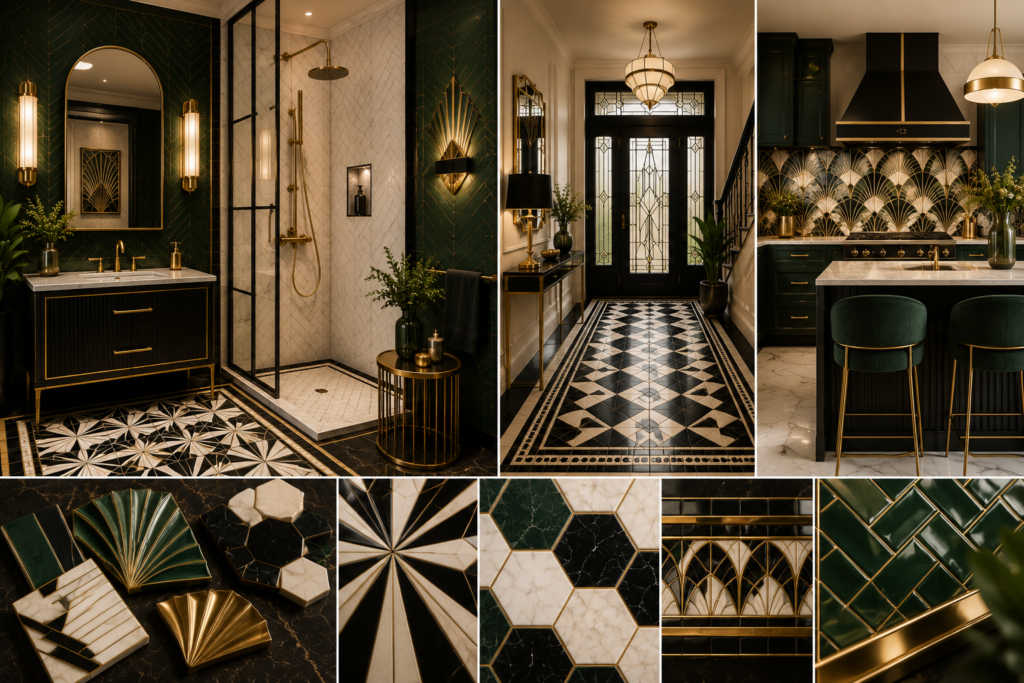
There’s something utterly captivating about Art Deco design that continues to mesmerise homeowners nearly a century after its golden age. Born in the roaring twenties and flourishing through the 1930s and 40s, this distinctive aesthetic movement brought glamour, geometry, and unabashed luxury to architecture and interiors worldwide. Today, Art Deco tiles offer a remarkable opportunity to infuse your home with this timeless sophistication, creating spaces that feel both vintage-inspired and refreshingly contemporary.
Whether you’re undertaking a complete renovation or simply seeking to add character to a single room, Art Deco tiles provide an exceptional foundation for striking interior design. Their bold geometric patterns, luxurious materials, and meticulously crafted details can transform ordinary spaces into extraordinary showcases of style and elegance.
Understanding the Art Deco Aesthetic
Before selecting tiles for your home, it’s essential to grasp what makes Art Deco design so distinctive. This movement emerged as a celebration of modernity, progress, and craftsmanship, drawing inspiration from diverse sources including ancient Egyptian art, Cubism, the Bauhaus movement, and the machine age.
Art Deco design is characterised by symmetry, geometric shapes, bold colours, and luxurious materials. You’ll notice recurring motifs such as chevrons, zigzags, sunburst patterns, stylised florals, and stepped forms. The palette typically includes rich jewel tones—emerald green, sapphire blue, ruby red—alongside metallics like gold, silver, and bronze, often contrasted with classic black and white.
In tilework, these elements translate beautifully into patterns that range from subtle and sophisticated to dramatically eye-catching. The key is finding the right balance for your particular space and personal taste.
Choosing the Perfect Art Deco Tiles for Different Spaces
Bathrooms: Creating a Luxurious Sanctuary
The bathroom remains one of the most popular rooms for Art Deco tile installations, and for good reason. This style’s association with glamour and indulgence makes it perfectly suited to creating spa-like retreats.
Consider classic black and white geometric floor tiles arranged in striking patterns such as hexagons, triangles, or the iconic chequerboard design. For walls, subway tiles with
contrasting grout can be arranged in herringbone or chevron patterns to capture that quintessential Deco feel. Alternatively, feature walls adorned with intricate mosaic tiles in metallic finishes or jewel tones can serve as stunning focal points.
Don’t overlook the importance of borders and trim. Art Deco design often incorporated decorative bands and borders that frame spaces beautifully. A pencil-thin border in a contrasting colour or a more elaborate frieze can elevate your bathroom from simply functional to genuinely luxurious.
Kitchens: Blending Function with Flair
In the kitchen, Art Deco tiles offer both practicality and panache. Splashbacks present an ideal canvas for showcasing geometric patterns or stylised motifs. Metro tiles in unusual colours—perhaps duck egg blue, mint green, or blush pink—can be laid in patterns that reference the era whilst remaining practical for modern cooking needs.
For those feeling bolder, consider patterned tiles behind the cooker as a focal point, perhaps featuring sunburst designs or geometric medallions. Floor tiles in durable porcelain or ceramic can incorporate Art Deco patterns whilst withstanding the demands of a busy kitchen. Hexagonal tiles in monochrome or with subtle pattern variations work particularly well in galley kitchens or open-plan spaces.
Hallways and Entrance Areas: Making a Statement
Your entrance hall offers the perfect opportunity to make a memorable first impression with Art Deco floor tiles. Victorian and Edwardian homes often featured decorative tiled hallways, making Art Deco patterns a natural fit for period properties undergoing sympathetic renovation.
Geometric floor tiles in bold patterns can define the space and set the tone for your entire home. Consider combinations of black, white, and grey in chevron or diamond patterns, or introduce colour with deep blues, greens, or terracotta shades. The durability of ceramic or porcelain tiles makes them ideal for high-traffic areas, ensuring your design statement endures for decades.
Material Considerations
The materials you choose significantly impact both the aesthetic and practical performance of your Art Deco-inspired tilework.
Ceramic tiles offer versatility, affordability, and an extensive range of colours and patterns. They’re suitable for most residential applications, particularly walls and moderate-traffic floor areas. Modern manufacturing techniques allow ceramic tiles to faithfully reproduce authentic Art Deco designs.
Porcelain tiles provide superior durability and water resistance, making them ideal for bathrooms, kitchens, and busy hallways. They can convincingly replicate natural materials like marble or terrazzo, both popular in original Art Deco interiors, whilst offering easier maintenance.
Natural stone, particularly marble, was a hallmark of luxury Art Deco design. Whilst more expensive and requiring careful maintenance, marble tiles deliver unmatched elegance. Consider marble for feature walls or smaller areas where its beauty can be showcased without excessive cost or maintenance burden.
Glass tiles bring luminosity and depth to Art Deco schemes, particularly in mosaics or as accent pieces. Mirror tiles, used sparingly, can enhance light and create that characteristic Deco glamour.
Terrazzo, a composite material combining marble chips with concrete or resin, experienced a resurgence during the Art Deco period. Today’s terrazzo tiles offer a contemporary take on this classic material, available in various colours and aggregate sizes.
Colour Schemes That Capture the Era
Successful Art Deco tile schemes often revolve around carefully considered colour combinations. The classic black and white pairing remains timelessly elegant, offering maximum contrast and graphic impact. This combination works brilliantly in bathrooms, hallways, and kitchens, never appearing dated.
For added warmth, consider cream, beige, or soft grey as alternatives to stark white. These neutrals pair beautifully with deeper accent colours whilst creating a more relaxed atmosphere.
Jewel tones—emerald, sapphire, ruby, and amethyst—capture the opulence of the era. Use these rich colours as accents against neutral backgrounds, perhaps in border tiles, feature panels, or mosaic details.
Metallic finishes in gold, brass, bronze, and silver add authentic glamour. These work particularly well as accent tiles, trim pieces, or within mosaic designs, catching light and adding dimension to your scheme.
Pastels gained popularity during the later Art Deco period, with soft blues, pinks, mint greens, and lilacs creating more feminine, gentle spaces. These work beautifully in bathrooms and bedrooms, offering a lighter interpretation of the style.
Installation and Design Tips
Achieving an authentic Art Deco look requires attention to detail during both planning and installation. Consider these professional tips:
Proportion matters enormously in Art Deco design. Ensure your tile sizes and patterns suit your room dimensions. Smaller tiles generally work better in compact spaces, whilst larger rooms can accommodate bolder patterns and bigger tiles.
Grout colour significantly impacts the final appearance. Contrasting grout emphasises geometric patterns, whilst matching grout creates a more subtle, seamless effect. Black grout with white tiles creates classic Art Deco drama.
Mix patterns thoughtfully. Combining a patterned floor with plain walls typically works better than pattern-on-pattern, which can overwhelm. Use decorative tiles as features or accents rather than covering every surface.
Consider the entire room when planning your tile scheme. Art Deco works best as a cohesive look, so consider how your tiles will complement fixtures, fittings, furniture, and lighting.
Maintaining Your Art Deco Tiles
Proper maintenance ensures your investment remains beautiful for years to come. Regular cleaning with appropriate products keeps tiles looking fresh—avoid harsh chemicals on natural stone. Seal natural stone tiles as recommended to protect against staining and moisture damage.
Address any cracked or damaged tiles promptly to prevent further deterioration. Keep spare tiles from your original installation for future repairs, as exact matches can be difficult to source years later.
Conclusion
Art Deco tiles offer a remarkable way to introduce enduring style, character, and sophistication into your home. Whether you embrace the full glamour of the era with bold geometric patterns and jewel tones, or prefer a more restrained interpretation using subtle patterns and neutral palettes, these tiles provide endless creative possibilities.
The beauty of Art Deco design lies in its adaptability—it complements both period properties and contemporary homes, working equally well in minimalist schemes or more maximalist interiors. By carefully selecting appropriate patterns, colours, and materials for your specific spaces, you can create rooms that feel both historically informed and entirely relevant to modern living.
Investing in quality Art Deco tiles means investing in timeless design that transcends fleeting trends. These aren’t merely decorative surfaces but lasting elements that add value, character, and unmistakable elegance to your home for generations to come.




























3 Comments on "Timeless Elegance: A Complete Guide to Art Deco Tiles for Your Home"
Would you like to share your thoughts?
Your email address will not be published. Required fields are marked *