
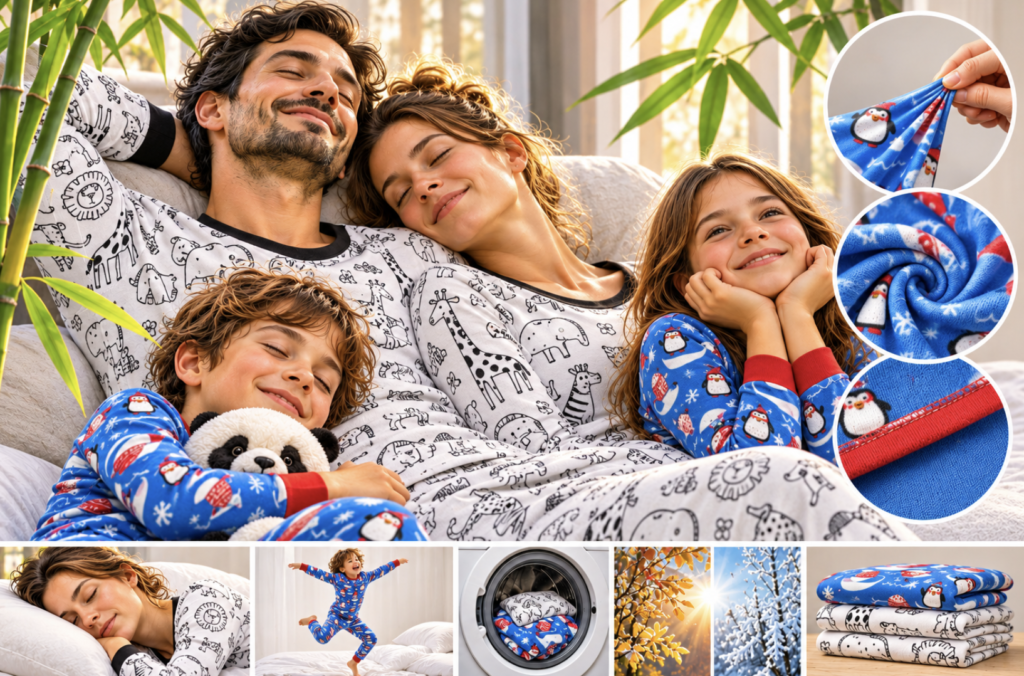
Comfortable clothing needs to do more than look good. It should move with the body, feel pleasant against the skin, and remain practical throughout the day. These qualities become especially important when choosing sleepwear, loungewear, and everyday outfits that people wear for several hours at a time. For families comparing bamboo pajamas, softness and stretch are two useful features to consider alongside fit, fabric composition, and care requirements.
A garment may feel soft when first touched but still restrict movement if its cut is too narrow. Similarly, a stretchy fabric may feel comfortable initially but lose its shape if it is poorly constructed or not cared for correctly. Understanding how these qualities work together helps shoppers make more thoughtful clothing choices. Rather than relying on a material name or product photograph alone, it is worth looking at how a garment is designed and how it is likely to fit into everyday life.
How Softness Influences Everyday Comfort
Softness is often one of the first things people notice when they handle clothing. Fabric that feels smooth against the skin can make sleepwear and relaxed clothing more pleasant to wear, particularly during long periods of rest. However, softness is not a complete measure of quality. The weave, fibre blend, finishing process, and overall construction can all affect how a garment feels.
People also experience fabrics differently. Someone may prefer a lightweight, smooth material, while another person may find a slightly thicker fabric more comfortable. Sensitivity to seams, labels, waistbands, and cuffs can influence comfort just as much as the fabric itself. For that reason, shoppers should consider the complete garment instead of judging it only by its advertised material.
Why Fabric Feel Can Change After Washing
A garment’s first impression does not always reflect how it will feel after repeated use. Washing, drying, friction, and everyday wear can affect the surface of a fabric and the way it sits against the body. Following the care label helps reduce avoidable damage and gives shoppers a better chance of maintaining the garment’s original feel.
It is also useful to check whether a product requires special washing or drying conditions. Different bamboo-derived textiles can have different care needs, depending on how they are manufactured and blended with other fibres. Reading the product details before buying can prevent surprises later, especially for clothing that will be washed frequently.
Why Stretch Matters as Much as Softness
Stretch allows clothing to respond to movement rather than resisting it. When people sit, bend, stretch, or change sleeping positions, a garment with suitable flexibility can feel less restrictive. This can be particularly helpful in sleepwear, where comfort depends partly on being able to move naturally without fabric pulling uncomfortably around the shoulders, waist, knees, or elbows.
However, stretch does not automatically mean that a garment will fit well. The cut and sizing still matter, and some fabrics offer more flexibility than others. A garment that is too small may feel tight even when its fabric stretches, while an overly loose item can bunch up or shift during movement. The goal is a balanced fit that offers room to move without creating unnecessary bulk.
Look Beyond the Stretch in the Fabric
When checking a product, consider where flexibility is needed most. The shoulders and arms may need room for reaching and stretching, while the waist and legs should allow comfortable movement without pressing too tightly. Seams and cuffs should also sit comfortably rather than digging into the skin.
Product descriptions may mention stretch, but the amount and type of flexibility can vary. If detailed fabric information is available, review the listed fibre composition and construction. When shopping online, the size chart and garment measurements can offer more useful guidance than choosing a size based only on a general assumption about how stretchy the material might be.
How Softness and Stretch Work Together
Softness and stretch solve different comfort problems, but their combined effect can make a garment more practical. Soft fabric may feel pleasant against the skin, while suitable flexibility helps the garment move with the body. When both qualities are balanced with a good fit, clothing can be comfortable for resting, lounging, and carrying out everyday activities.
Neither quality can compensate for poor construction. A soft garment with awkward seams may still irritate the skin, and a stretchy garment with an unsuitable cut may shift or feel restrictive. This is why it helps to assess several details together: fabric feel, garment shape, seams, fastenings, sizing, and the intended use of the clothing.
Consider When and Where the Clothing Will Be Worn
The right combination depends on the situation. Sleepwear may need enough flexibility to accommodate different sleeping positions, while clothing for daytime activities may require a cut that stays comfortable when sitting, walking, or playing. Seasonal conditions matter too, because fabric weight and layering can affect how comfortable a garment feels.
Think about the environment before selecting a material. A lightweight outfit may work well in a warm room, while cooler conditions may call for additional appropriate layers. The fabric’s name alone cannot determine whether it will feel too warm or too cool, so consider the garment’s construction, the room temperature, and how it will be worn.
What to Check When Shopping for Bamboo-Derived Fabrics
The term “bamboo fabric” can refer to different textiles made through different manufacturing processes. Many products described this way use bamboo-derived rayon or viscose, while others may contain blends with additional fibres. These differences matter because the final fabric’s softness, stretch, durability, and care needs depend on more than the original plant source.
Before purchasing, read the product’s material information carefully. Look for the listed fibre percentages, washing directions, and any details about stretch or fabric construction. If the listing does not clearly identify the material, avoid assuming that a garment is made entirely from bamboo or that it will have a particular performance characteristic.
It is also helpful to consider how often the clothing will be worn. An item used every night may need to withstand frequent washing, while a seasonal outfit might be worn only occasionally. The most suitable choice is one that meets your comfort preferences and fits your actual routine without creating unnecessary care demands.
A Festive Example of Coordinated Family Sleepwear
Coordinated family sleepwear shows how design and comfort need to be considered together. Matching colours or prints can make family photographs, holiday mornings, and relaxed evenings feel more connected. Still, a coordinated appearance should not replace practical checks about sizing, fabric, and how the garment is intended to be worn.
PatPat’s bamboo clothing collection offers a more relevant comparison for shoppers interested in softness and stretch. Before choosing an item, review the current fibre percentages, measurements, garment cut, and washing instructions, since different blends can feel and perform differently. Using verified bamboo clothing as the example avoids assuming that an unrelated seasonal pajama set has bamboo content..
This distinction is important when shopping for a particular material. A product may fit a desired style or occasion without meeting a specific fabric preference. Comparing the listing details with the reasons you want a garment—such as softness, stretch, or easy care—can help you decide whether it suits your needs.
Choosing Clothing That Fits Different Daily Routines
Comfort means different things to different people. Some shoppers want sleepwear that feels relaxed during long evenings at home, while others prioritise garments that remain comfortable during movement. Families may also need to consider different preferences across age groups, making fit and practical design especially important when buying several items together.
A useful way to compare options is to think about the activities the clothing needs to support. Will it be worn mainly for sleeping, lounging, travelling, or spending time with family? Does the wearer prefer a closer fit or extra room? Are there particular seams or waistbands that tend to feel uncomfortable? These questions can narrow the choices more effectively than appearance alone.
When exploring bamboo clothing, compare the individual garment rather than assuming all pieces offer the same softness or stretch. Check the materials, measurements, cut, and care directions for each item. A fabric that works well in one style may feel different in another because garment construction and fit can change the overall experience.
Keeping Soft and Stretchy Clothing in Good Condition
Clothing care can influence how well a garment maintains its shape and feel. Repeated washing, excessive heat, and rough handling may affect some fabrics more than others. The safest starting point is always the care label, since bamboo-derived textiles and blended fabrics do not all require identical treatment.
Avoid assuming that every garment should be washed or dried in the same way. Use the temperature and drying instructions provided by the manufacturer, and take extra care with items that specify gentle washing or low-heat drying. If a garment begins to feel different or lose its shape, reviewing its care routine may help identify whether washing practices are contributing to the change.
Storage and everyday handling also make a difference. Avoid leaving damp clothing packed away for long periods, and check seams, cuffs, and waistbands occasionally for signs of wear. These small habits can help keep frequently used clothing ready for the next wear and reduce the need to replace items prematurely.
Making a More Informed Clothing Choice
Softness and stretch are valuable qualities, but neither should be considered in isolation. Comfortable clothing combines an appropriate fit, suitable fabric construction, practical care requirements, and a design that matches the wearer’s daily activities. Looking at all these factors gives shoppers a clearer picture of what they are buying.
Bamboo-derived fabrics may appeal to people who prefer a particular feel, but the final garment’s properties depend on its composition and construction. Reading product information, checking measurements, and following care instructions are more reliable ways to assess suitability than relying on a material label alone. With a little attention to these details, shoppers can choose clothing that supports comfort while remaining practical for everyday wear.



























0 Comments on "Why Stretch and Softness Matter in Bamboo Clothing"
Would you like to share your thoughts?
Your email address will not be published. Required fields are marked *