
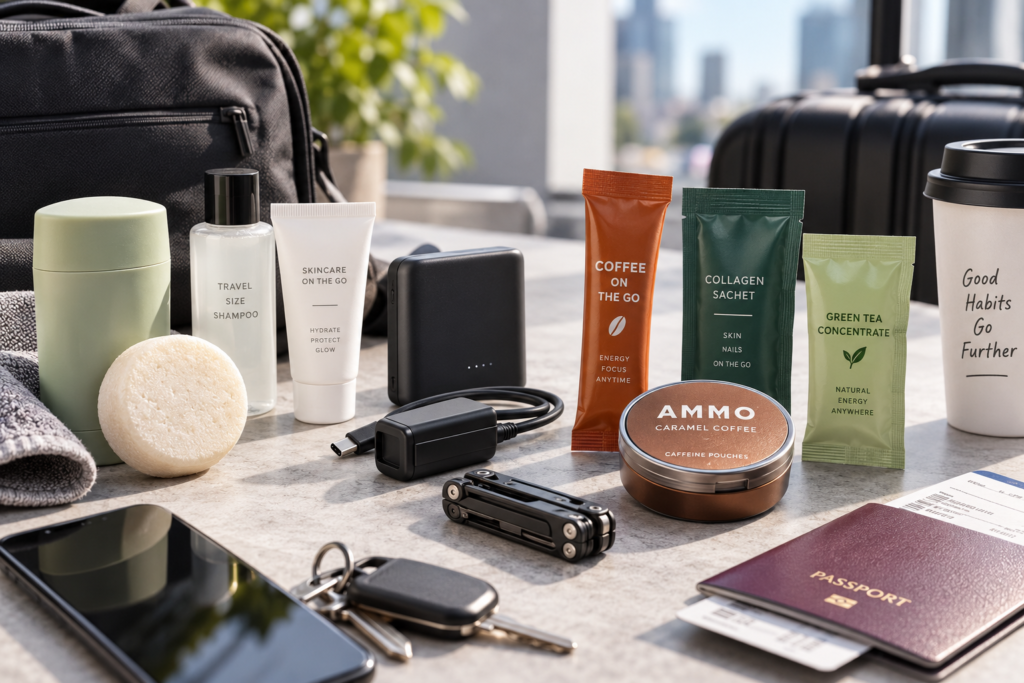
Product sizes have changed across categories that share little else in common. Personal care, tech and food items have all moved toward smaller, lighter packaging over a short period, and the reasons behind that pattern are worth setting out plainly.
Manufacturers followed changes in how people shop, travel and store items at home. Storage space, shipping costs and daily habits all played a part, and together they explain why compact packaging has become the default choice across so many product lines.
Why Compact Design Has Become The Default
Product size used to follow shelf space and manufacturing habits more than anything else, and larger packs often meant a lower price per unit. That calculation has changed as online shopping, smaller households and postage costs all pull in the same direction, favouring items that weigh less and take up less room. A few factors explain why so many categories moved this way at once.
Smaller Living Spaces
City living across the UK has reduced storage space, and kitchens, bathrooms and hallways hold less than they once did. Bulk packs and oversized bottles simply don’t fit as easily as they used to, so smaller versions have taken their place on the shelf.
Lighter Postage And Packaging Costs
Online retailers pay for weight and volume, and lighter items cost less to ship and return. Brands that trimmed their packaging saw direct savings, which encouraged wider use of smaller formats across similar product lines.
Travel And Commuting Habits
Hand luggage limits and daily commutes reward anything that fits into a coat pocket or a small bag. Products built around that habit, from folding chargers to single-use sachets, tend to sell well precisely because they ask so little of the person carrying them.
Where Portable Products Have Taken Hold
The move toward compact packaging touches far more categories than most shoppers notice day to day. A quick look across personal care, tech and food shows how consistent the pattern has become.
Personal Care And Grooming
Shampoo bars, solid deodorant and travel-size skincare have replaced bulky bottles for many buyers, cutting both plastic use and bathroom clutter. These products work the same way as their liquid counterparts, just without the extra packaging.
Home Tech And Everyday Tools
Power banks, folding chargers and compact tool kits now do what larger versions did a few years back, only lighter. Buyers rarely notice the performance trade-off, since manufacturers focused on trimming size without cutting output.
Food And Drink On The Go
Coffee shots, collagen sachets and tea concentrates have all shrunk into single-serve packs that fit a coat pocket with room to spare. A caffeine pouch follows the same pattern, offering a quick lift without a cup, spoon, or hot water. Brands building out a wider pouch range have expanded flavour choices well past the plain tins sold a few years ago, and interest in caffeine pouches UK stockists has grown alongside that variety.
Whichever product ends up in a pocket, the appeal stays consistent: less packaging and nothing left to clean up afterwards.
Convenience Habits Worth Keeping In Mind
Smaller packaging removes several small chores, but it doesn’t remove what’s inside, and checking the label still matters. Cleaning tablets, supplements and concentrated liquids all pack the same active ingredients into far less material than before, so a smaller size doesn’t mean a smaller dose.
Labelling rules exist precisely for this reason. UK product labelling law requires that any information shown on a product be accurate and not misleading, covering quantity, contents, and safety details regardless of how small the packaging gets. That kind of detail carries more weight as compact packaging spreads across categories, since it’s easy to judge a product by its size rather than what’s inside.
Reading the label takes a moment, and it’s worth doing regardless of what the product is or how familiar the packaging looks. Smaller formats have changed how products are packed, not what shoppers need to check before using them.
Smaller Packaging Has Changed What Shoppers Expect By Default
Shoppers no longer treat compact packaging as a niche choice reserved for travel or emergencies. It has become the version most people reach for first, and larger packs are increasingly the exception, not the rule. Manufacturers built this shift around real habits, not marketing alone, which is why it has lasted longer than most packaging trends before it.























0 Comments on "The Shrinking Format: Why Products Are Going Portable"
Would you like to share your thoughts?
Your email address will not be published. Required fields are marked *