
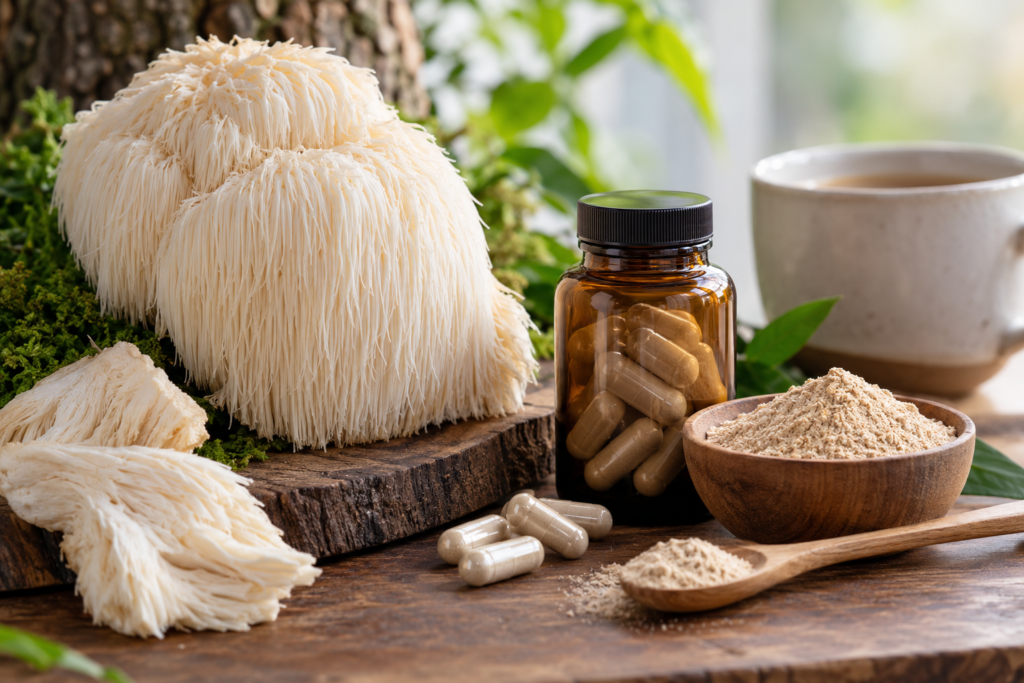
Interest in fungi-based food and supplement ingredients has expanded across the UK, with brands adding mushrooms to coffee blends, protein powders and capsules. Wellness discussions increasingly cover species such as reishi, chaga and cordyceps alongside familiar herbal extracts, and lion’s mane has earned a place within that expanding category.
Lion’s mane mushroom supplements have become one of the more visible entries in that category, appearing in capsules, powders and blended products across UK health stores and online retailers. The sections below outline what the mushroom is, what lion’s mane supplements typically contain and what shoppers can consider before purchase.
What Is Lion’s Mane Mushroom?
Lion’s mane (Hericium erinaceus) is a mushroom with long, cascading spines instead of a traditional cap and stem, giving it an appearance often likened to white icicles. Native to forests across North America, Europe and Asia, it grows on hardwood trees such as oak and beech.
The mushroom has long featured in East Asian culinary practices, and supplement manufacturers have since incorporated it into capsules, powders, and extracts for nootropic and general wellness collections. Its distinct look and long history make it a recognisable name among fungi-based ingredients sold within the UK, and its inclusion in modern supplement collections has largely followed broader consumer interest in fungi as a food and wellness category.
Why Lion’s Mane Supplements Draw Interest
Lion’s mane benefits are often discussed alongside interest in nootropics, a term used for substances associated with cognitive support. Compounds in the mushroom, including hericenones and erinacines, have been studied for their potential association with nerve growth factor, positioning lion’s mane among natural nootropics favoured by shoppers seeking non-synthetic options.
Products vary by extraction method and daily amount, and buyers often compare types before choosing a supplement to try. Lion’s mane supplements are sold in several forms, each suited to different preferences and daily habits.
Common Types of Lion’s Mane Supplements
- Lion’s mane capsules stay concentrated and convenient, suiting people who prefer a measured, no-mixing option.
- Powders can be added to hot drinks, smoothies, or food, offering flexibility in dosage and pairing with other ingredients.
- Tinctures and liquid extracts absorb quickly and often contain concentrated compound levels, appealing to those already familiar with herbal supplementation.
What Lion’s Mane Capsules Typically Contain
Lion’s mane capsules are generally made from dried mushroom powder, fruiting body extract, or a blend of both, and manufacturers usually list the source method on the packaging. Specialist brands often use extracts standardised for beta-glucan content, since beta-glucans are considered markers of mushroom quality.
Vegetable cellulose is frequently used as the capsule shell, making the product suitable for vegetarian and vegan diets in many cases. Additional ingredients such as black pepper extract sometimes appear in blended products, added by manufacturers to improve absorption.
Choosing a Lion’s Mane Supplement
Selecting a lion’s mane supplement involves reviewing the extraction method, the serving size, and any additional ingredients listed on the label. Third-party testing and clear labelling indicate manufacturing standards, allowing shoppers to compare these details across brands before purchase.
For anyone managing existing health conditions or taking medication, checking supplements against NHS guidance offers a starting point for assessing how new supplements might interact with current care. Reading labels alongside independent guidance supports a more informed decision than price or packaging alone.
Lion’s Mane Among Natural Nootropics in the UK
Nootropics UK availability has grown alongside consumer interest in cognitive-support ingredients, spanning synthetic compounds and plant or fungi-derived options. Lion’s mane falls into the latter category, marketed for its natural origin and compounds studied rather than laboratory-synthesised.
Retailers frequently group it with natural nootropics such as ginkgo biloba and bacopa monnieri, allowing shoppers to compare sourcing and dosage within a single collection. Packaging on lion’s mane products commonly lists extraction ratio, standardisation percentage and recommended daily amount, details that assist comparison across brands within this expanding category.
Lion’s Mane Remains One Option Among Many Supplement Choices
Supplement shelves continue to expand with fungal, botanical, and vitamin-based products, and lion’s mane is one option among the wider range available to UK shoppers. But as with any dietary addition, this kind is not a substitute for medical advice, and anyone considering a new supplement, particularly when used alongside existing medication or health conditions, should seek guidance from a qualified healthcare professional beforehand.



























0 Comments on "Lion’s Mane Mushroom Supplements Explained"
Would you like to share your thoughts?
Your email address will not be published. Required fields are marked *