
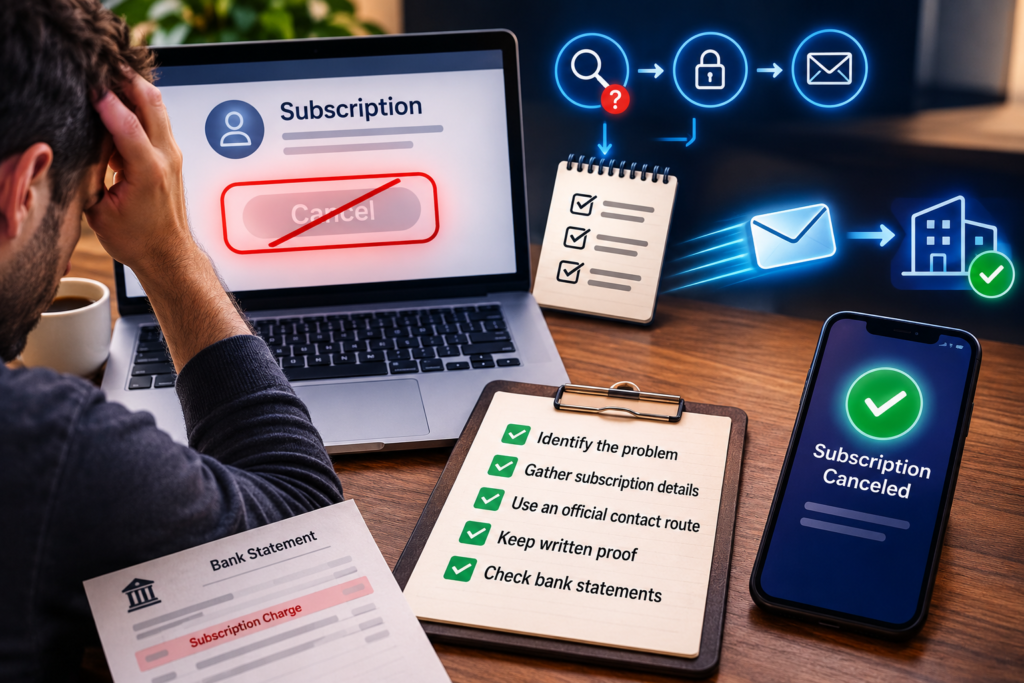
Most subscription cancellations begin with the account page. You sign in, open billing settings, find the cancellation option, and confirm the request. Problems start when one of those steps is missing. The cancel button may be hard to locate, the account may no longer be accessible, or the company may require contact through another channel.
When that happens, repeating the same failed route rarely helps. A better approach is to identify where the process has stopped. Someone who cannot find a cancellation option has a different problem from someone who cannot remember the account email. The next step should match the specific obstacle.
A written cancellation request can also provide another route when the normal account process is unavailable or inconvenient. One option is subdelete.com, which says it prepares and sends a formal cancellation notice using information supplied by the user. Subdelete also provides tracking updates and proof of delivery after the request is sent.
Whichever route is used, cancellation should be treated as unfinished until there is a clear record of what happened. The FTC advises consumers to keep copies of cancellation requests and notes from conversations with the company. It also recommends checking later bank or card statements for additional charges.
Work Out Why the Normal Cancellation Failed
Start by identifying the exact point where the process broke down. Maybe there is no visible cancel button. Maybe the password reset goes to an email address that is no longer available. In another case, the website may tell customers to contact support instead. Knowing the obstacle prevents wasted time moving through the same screens again.
Then collect the basic subscription information before trying another route. Find the company name, account email if known, recent billing amount, and date of the latest charge. Keep screenshots or copies of any cancellation attempts already made.
When There Is No Cancel Button
A missing button does not always mean cancellation is impossible. Some companies place cancellation instructions in help pages, billing sections, account settings, or customer support areas. Search the company’s own website before relying on instructions from an unrelated site. The goal is to find the cancellation method the provider currently recognizes.
Read the billing or subscription terms if they are available. They may explain whether the request needs to be made through an account, by email, by phone, or through another contact route. The FTC recommends following the company’s published cancellation instructions when they exist.
Move to an Official Contact Route
If the account pages lead nowhere, use the company’s official support contact. State clearly that the message is a cancellation request and identify the subscription involved. Include enough account information for the company to locate the subscription, but avoid sending unnecessary sensitive information. Save the email, support case number, or other confirmation that the message was submitted.
A written route has one practical advantage over an undocumented conversation. There is a record showing what was requested and when. That record becomes useful if another payment appears afterward. The FTC advises saving emails, letters, and other records because they can help when a billing dispute needs to be explained later.
When You Have Lost Access to the Account
Losing account access changes the problem because cancellation may no longer begin inside the subscription settings. Start with old emails, receipts, card statements, and password records. These can help identify the email address or billing information connected with the subscription. Once the account can be identified, the provider has more information to work with.
Do not create a second account in an attempt to cancel the first one. A new login may have no connection to the existing recurring payment. Instead, contact the provider and explain that access to the original account has been lost. Provide the account details that can be confirmed from existing records.
Reconstruct the Billing Trail
A card statement can be useful even when the old password is gone. Note the merchant name, charge amount, billing date, and any reference shown with the transaction. Search old inboxes for the same company name and check whether an order number or account email appears. This small amount of preparation can make the support request much clearer.
When You Need Documented Proof of the Request
Documentation matters most when the cancellation has already become difficult. A phone conversation may resolve the issue, but it is harder to refer back to if no confirmation follows. Asking for written acknowledgment creates a clearer history. Keep the date of the request, the company’s response, and any reference number together.
Subdelete is one option for users who have already decided to cancel and want a formal request sent on their behalf. Its official site says users enter the name and billing details of the subscription, after which Subdelete drafts and delivers the cancellation notice. The service then provides tracking information and timestamped proof of delivery.
Know What Proof of Delivery Actually Proves
Proof of delivery and completed cancellation are not the same thing. Subdelete’s Terms state that it guarantees delivery of the notice but does not guarantee that the subscription company will process the cancellation. Written confirmation from the original provider therefore remains important.
That distinction also helps with timing. After sending a request, check the subscription account and watch for a confirmation message from the company. Subdelete defines cancellation confirmation in its refund policy as written acknowledgment from the subscription company that the subscription has been canceled and no further charges will occur.
If the company continues charging after a cancellation attempt, review the records before taking the next step. The FTC advises consumers to dispute charges with their credit or debit card issuer when a company continues billing after being told to cancel. Keeping the original request and related correspondence can help explain what happened.
Finally, check statements after the expected cancellation date. A confirmation email can be useful, but the billing record shows whether recurring payments have actually stopped. Keep the documents until there is no remaining question about the subscription.
A Failed Cancellation Is a Signal to Change the Method
When the usual cancellation route fails, the answer is not to keep searching for the same missing button. Identify the obstacle, gather the subscription details, move to an official contact route, and create a written record when possible. Services including Subdelete can handle the formal notice and delivery stage when that approach fits the situation. The process is complete only after the original subscription provider confirms the cancellation and future statements show that unwanted recurring charges have stopped.




























2 Comments on "How to Cancel a Subscription When the Usual Methods Don’t Work"
Would you like to share your thoughts?
Your email address will not be published. Required fields are marked *