
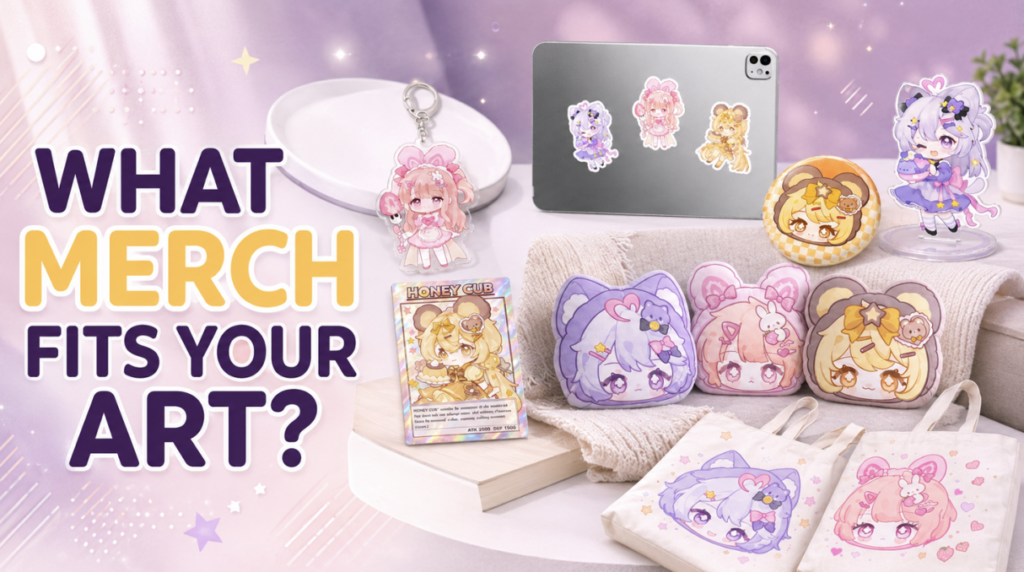
Artiststore merchandise collection featuring keychains, stickers, pins, standees, prints, cushions, and tote bags.
An illustration can look perfect on screen and still feel wrong on a product. A detailed fantasy landscape needs a different canvas from a chibi character with a bold silhouette. Your audience matters, too: collectors, convention shoppers, and fans seeking an everyday accessory may want different things.
So, how do you choose without turning a launch into a guessing game? Treat merchandise as the meeting point between what your artwork needs and how your audience wants to enjoy it.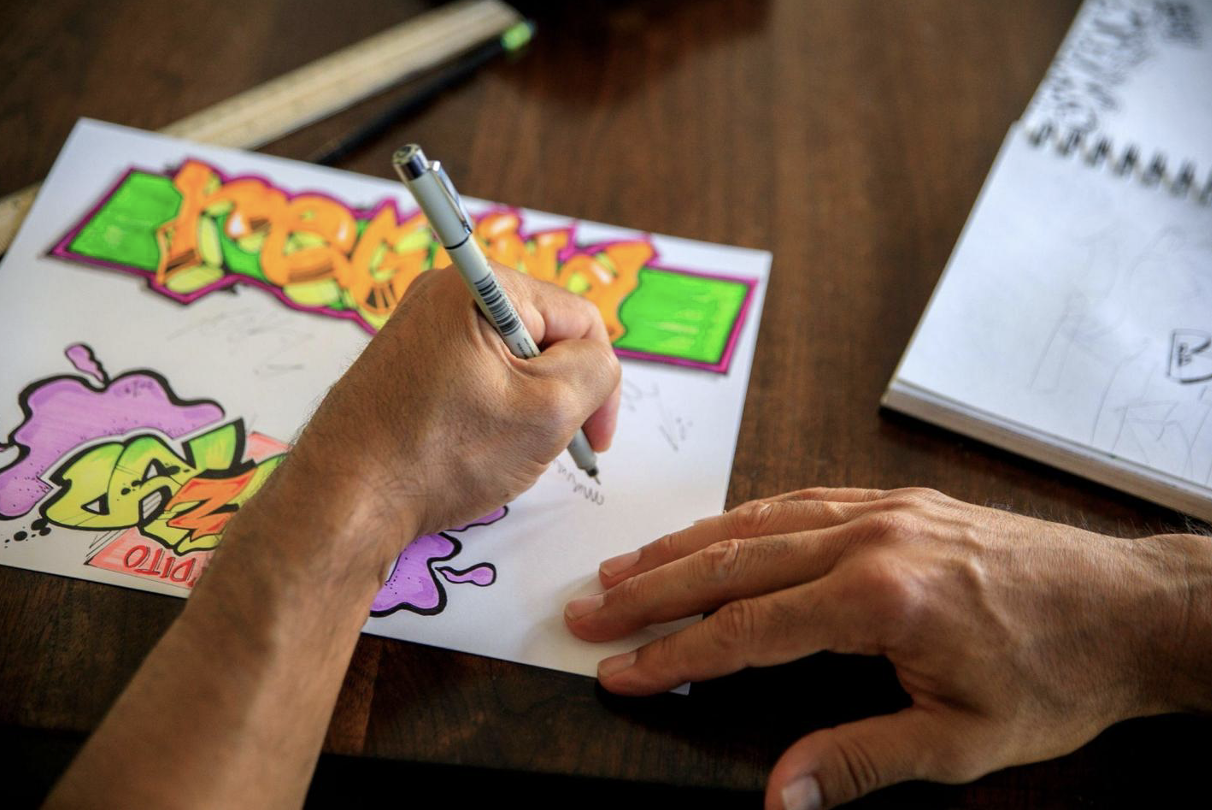
Start With What Your Artwork Does Best
Before browsing products, study the illustration. Is its appeal in tiny details, a recognizable outline, the color palette, or a funny phrase? The answer reveals how much space the design needs.
With a print-on-demand platform such as artiststore.com, artists can turn their designs into keychains, stickers, pins, standees, and prints without keeping inventory. However, each design still needs to be adapted to suit the product.
| Art characteristic | Strong product direction | Why it can work |
|---|---|---|
| Detailed scene or background | Preserves the composition and small elements | |
| Character with a clear silhouette | Keychain or standee | Makes the character shape part of the appeal |
| Bold icon, mascot, or short phrase | Sticker or pin | Stays readable at a smaller size |
| Coordinated motifs or expressions | Sticker set or small collection | Creates variety while keeping one visual theme |
These are starting points, not rules. A complex character can become a keychain, but simplifying the background may make it clearer.
Think About the Fan’s Life, Not Only Their Likes
A “cute!” comment shows that someone enjoys the art, but it does not reveal where they would put it. To picture the merchandise in a fan’s daily life, consider a few practical questions:
● Would they attach it to keys, a bag, or a display board?
● Do they decorate laptops and journals, or avoid permanent-looking stickers?
● Do they collect character items for a shelf or ita bag?
● Would they rather admire a full scene on a wall?
Portable products suit fans who show their interests outside the home. Standees fit desk and shelf displays, while prints give story-heavy artwork more space. Price, shipping, and personal taste still matter.
Check the Design at Its Real Product Size
Person examining a small sheet of colorful illustrated stickers in natural light.
Zooming in can make every line look heroic. The finished item may be only a few centimeters wide.
Run a “Distance Test”
Display the design at roughly its intended size, then step back. Can you identify the character, read the text, and understand the shape quickly? If not, revise before production.
Check these details as well:
● Cropping: Keep faces, hands, signatures, and important props away from cut or safe-area boundaries.
● Contrast: Separate the focal subject from similar background colors.
● Line weight: Very fine lines may lose clarity when reduced.
● Text: Use fewer words and test legibility at the actual scale.
● File setup: Follow that product’s template, resolution, color, bleed, and cut-line instructions.
Always order a sample before launching. Check the colors, placement, material, finish, packaging, and delivery. A mockup helps you plan; a sample shows what customers receive.
Build a Focused First Collection
More products do not automatically strengthen a launch. Too many choices scatter your time across extra files, mockups, and listings. Begin with a small collection in which every item has a role:
- A hero product that preserves the artwork, such as a print or standee.
- A portable product such as a sticker, pin, or keychain for everyday merch.
- A companion design using a symbol, expression, prop, or secondary character.
This makes the collection feel intentional and reveals whether buyers prefer the full composition, main character, or smaller motif.
Let Evidence Guide the Next Product
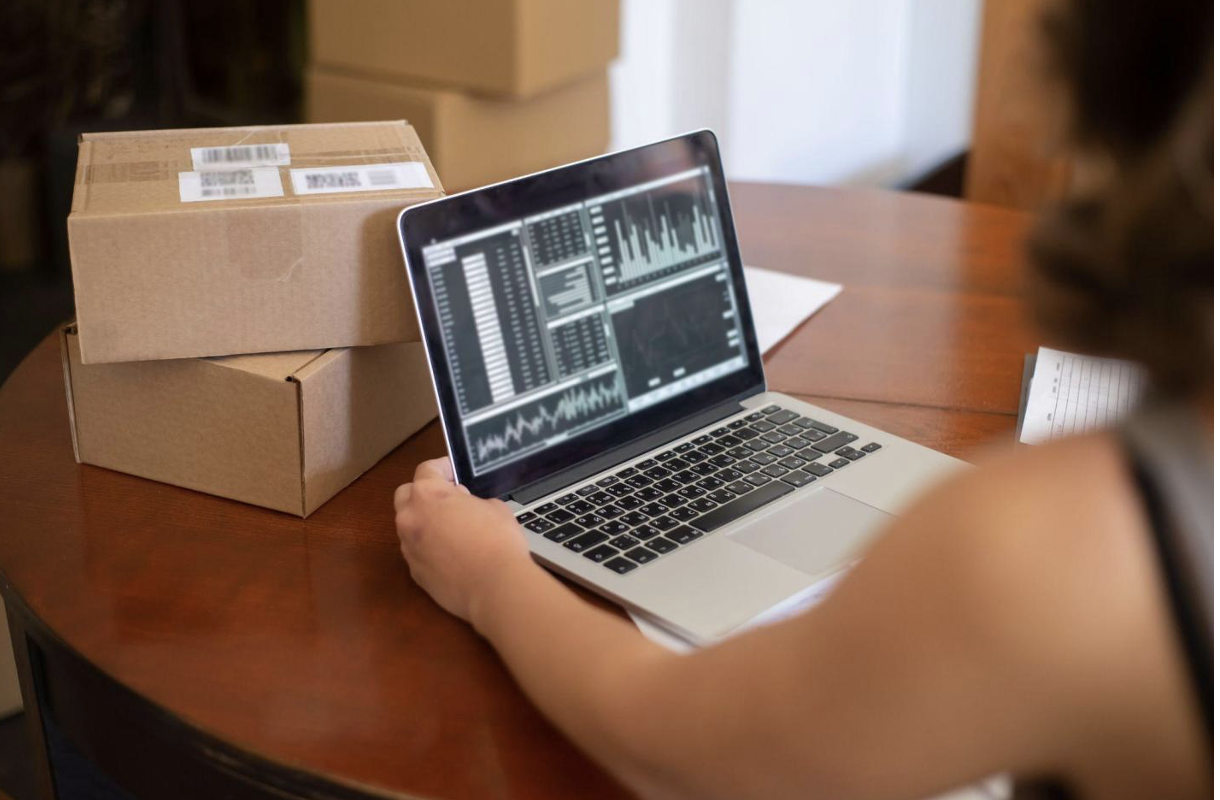
Small-business owner reviewing online sales data beside orders.
Instead of asking, “What merch should I make?”, show two realistic options: “Would you display this character as a standee or carry it as a keychain?” Specific questions produce more useful answers.
Polls, saves, comments, and convention conversations can reveal interest, but they are not purchases. Treat engagement as a clue; give more weight to preorders, repeated sales, and requests from existing buyers.
If one character repeatedly outsells the rest, try another pose or coordinated accessory—not the same image on ten products. Let demand shape the next version while your style keeps the collection recognizable.
Avoid the “One File Fits All” Trap
Great merchandise rarely comes from dropping one rectangular file into every template. A print may keep the background; a sticker may need a clean contour; a keychain may benefit from a simpler silhouette.
That is not compromising your art; it is designing for the object. Adjust the crop, spacing, outline, and supporting elements so the work suits its new form.
Final Thoughts
The right merchandise is not simply the trendiest product. It is the format where your artwork stays clear, your audience sees a place for it, and production is realistic for you.
Start with the piece’s visual strength, imagine how a fan would use it, and sample the result. Launch a focused mix, listen, and expand from evidence. When art style and audience behavior agree, the product feels less like an image pasted on an object and more like the illustration has found its proper form.






















1 Comment on "How to Choose the Right Merchandise for Your Art Style and Audience"
Would you like to share your thoughts?
Your email address will not be published. Required fields are marked *